Followers

Thursday, November 7, 2024


Hotel Lenhart Staff

Circa July 17, 1959


The Lenhart family's long tradition of tourist accommodations was begun by Dr. John J. Lenhart who combined the unlikely professions of medical doctor and hotel manager beginning in 1879.  In that year, Dr. Lenhart who had been born in Pittsburgh in 1845, came to Bemus Point from Ellery Center where he had carried on a thriving practice for eight years.  After the family was settled in Bemus Point, Lenhart and his wife joined her mother in the operation of a small boarding house while he also continued to practice medicine.

Three years later, after noting the increase in demand for summer vacation spots around the lake, Doctor Lenhart built the first hotel which carried the family name.  It had a choice location on the point near the ferry landing.  When the hotel opened for business during the summer of 1882 it was described as being "unsurpassed for sightliness and comfort" with its graceful lines, mansard roof, dormers, peaks and ornamental tower.  Both the front, which extended 82 feet along Lakeside Drive and the 65 foot south end had broad verandas which offered extensive views of the lake.  The forty sleeping rooms on the upper floors could accommodate eighty guests.  A large lobby, parlor, dining room and kitchen occupied the first level.  Lumber for the frame structure was brought up the lake by scows after it was unloaded from the N.Y.P.&O depot in Jamestown. 

Summers in the mid and late 1880's found the Bemus Point hotels, large and small, fully occupied week after week.  Off season the owners were busy with upkeep and maintenance in the anticipation of the next summer season.  In 1890, the Lenharts completely redecorated the hotel with new wallpaper, paint, carpeting and built a tennis court for their guest's recreation. 

Due to an October 1891 fire which completely destroyed the original Hotel Lenhart, the family drew plans for a second, larger tourist accommodation on the same site.  In May of the following year it was announced the new hotel would be open for guests by June 1, 1892. The replacement cost of the hotel was $15,000 but the result was a hotel that was "twice as large and more modern. The new hotel's seventy rooms would now accommodate 150 guests.

Dr. Lenhart continued in charge of the second Hotel Lenhart in the early years of the 1900s, eventually passing managerial duties over to his daughter, Mrs. Charlotte Johnston.  He retired from his medical practice around 1908 and passed in 1914 at the age of 70. The Johnston family, third generation members of the Lenhart family, continued to own and operate the hotel for many years.  

The hotel was 100 years old in 1992 with the Athenaeum Hotel on the grounds of Chautauqua Institution being the only two hotels remaining from Chautauqua Lake's busy resort hotel era.  


Athenaeum Hotel

Chautauqua Institution


Barbara "Bebe" Johnston at the front desk


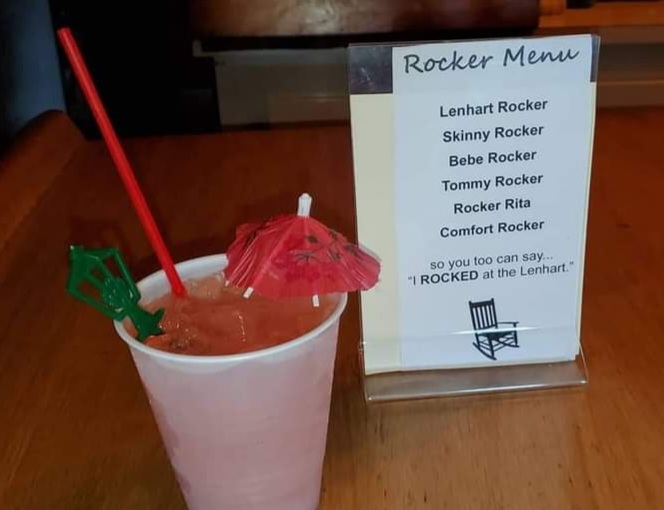
The Lenhart Rocker


The Peppermint Patty


The Lenhart Hotel Rockers

in the 

 original Fiesta colors .. orange, yellow, green and blue


The Lenhart Hotel Victorian Dining Room


The Hotel Lenhart Holiday Ornaments


The Hotel Lenhart Staff
Circa 2013


https://youtube.com/watch?v=dSVkH3E3aa88&feature=shared


An informative interview with John Lenhart Johnston

 and his sister, Barbara "Bebe" J. Johnston

.. fourth generation owners ..


Sunday, November 3, 2024


The 53rd NYC Marathon

November 3, 2024


The first race in 1970 were laps around Central Park.  Out of the 127 competitors, only 55 actually finished the race with approximately 100 spectators.  The race continued to take place in Central Park until 1976 when it gained international recognition and spread out over 5  boroughs of New York City. Organized by New York Road Runners, the very first edition of the NYC Marathon had a budget of $1,000 and a $1 entry fee.  The NYC Marathon now begins on Staten Island and runs through Brooklyn, Queens, the Bronx and Manhattan.  The 2024 entry fee is $255 for NYRR members, $315 for non-members and $358 for non-U.S. residents.  These fees are non-refundable. 


The New York City Marathon, currently branded as the TCS New York City Marathon for sponsorship reasons, is an annual marathon that courses through the five boroughs of New York City.  It is the largest marathon in the world with 53,627 finishers in 2019 and 98,247 applicants for the 2017 race  Along with the Boston Marathon and the Chicago Marathon, it is among the pre-eminent long-distance annual running events in the United Sate and is one of the World Marathon Majors which includes annual races for the cities of Tokyo, Boston and London.


Nina Kuscsik challenged the rules and made history in the marathon's early years.  In the very first NYC marathon, Nina was the only woman entered in the race.  She ended up suffering from a gastrointestinal issue that forced her to drop out at mile 15.  In 1971, she pioneered efforts for equality between the sexes in marathons when she asked the AAU (Amateur Athletic Union) if women could compete officially against the men.  They agreed, but enforced a rule requiring a different start time for women.  

In 1972, only seven months after winning the Boston Marathon, Nina participated in the NYC Marathon with seven other women. To protest the different time, which was supposed to give them a ten minute head-start, the women sat down when the gun went off.  After ten minutes, the women got up and ran alongside the men.  Nina ended up winning the race, making her the first woman to win the Boston and New York Marathons in one year.  The AAU dropped the separate start time rule and Nina returned to New York for another victory in 1973. After her victory in 1972 she is quoted as saying  these words ..

Running is neither masculine or feminine.  It's just healthy"

Nina Kuscsik


Another famous runner by the name of Grete Waitz broke records and won the NYC Marathon an unprecedented 9 times in 1978, 1979, 1980, 1982, 1983, 1984, 1985, 1986 and 1988.  After winning her first NYC Marathon in 1978, Norwegian runner Grete Waitz became the first woman in history to complete a major marathon in under 2:30 in 1979.  In 1978, wearing bib #1173 she had a world-record time of 2:32:30.  Waitz also won the London Marathon in 1983, 1986 and the Stockholm Marathon in 1988 which was the same year of her final win in New York.  Along the way, she earned five world records and achieved royalty status in her home country of Norway. 

This was the same year that saw over 10,000 people finish the race.  Grete beat her own record again in 1980, making her nine minutes faster than any other woman to complete the race.  She won her ninth and final victory in 1988 before retiring from competitive running.  In 1992, however, she ran the marathon for the last time alongside Fred Lebow,  the co-president of the NYRR (New York Road Runners) and co-founder of the New York City Marathon. NYRR serves 695,000 runners of all ages and abilities, annually, through hundreds of races, community open runs, walks and training. Waitz became chair of the NYRR Foundation and was an accomplished coach and advocate before she passed in Oslo, Norway on April 19, 2011 at age 57.

Grete and Fred


Waltz's last marathon, New York City in 1992, wasn't a shout-worthy sprint to the tape, but it was every bit as memorable and even more heroic.  Waltz ran all 26.2 miles with New York City Marathon co-founder and race director, Fred Lebow.  Breaking records and changing minds about what women could achieve in the sport had taught her poise.  In this photo she tried to step aside before the finish line, but Lebow grabbed her arm and they tearfully bent the tape, together. 

The first wheelchair division was added to the New York City Marathon in 2000 allowing athletes with disabilities to compete.  A cash prize was introduced a year later, making it an even mmore rewarding feat.  In 2006, Australian athlete Kurt Fearnley set a still-standing record in the wheelchair division of 1:29:22.


In 2002, the NYRR Team for Kids launched a charity at the NYC Marathon.  The team of adult runners participated in the NYC Marathon to raise funds for youth and community programs focused on fitness and nutrition.  Their free programs benefit nearly 250,000 kids acrosss the United States and serve nearly 700,000 runners of all ages annually through races, training and community runs. Fundraisers are guaranteed a spot in premier running events with the purpose of making every mile count towards healthy and supported youth.

The New York City Marathon is and will remain .. one of the most legendary marathons in the world.  Abdi Nageeye of the Netherlands and Sheila Chepkirui of Kenya won the 2024 New York City Marathon men's and women's 2024 races.  Congratulations.


Friday, November 1, 2024


Vintage Cast Aluminum License Plate Toppers

Collector Items .. Today


Cast aluminium License Plate Topper
Stenso Motor Co Dealership
Grafton, North Dakota


Toppers were created to often times advertise dealerships and quickly became useful boosters as more Americans traveled from home. 


History and Evolution of License Plate Toppers

One aspect of automotive history that offers an excellent opportunity to collectors, decorators and vintage-lovers alike is the vintage license plate topper (hereafter referred to as "toppers").  These wonderful pieces of history got their start in the 1920s and 1930s when individual car owners as well as states, attractions, organizations, companies, municipalities and colleges sought ways to promote themselves, to advertise their services to the public, to boost tourism and to make their existence known on a grander scale.


Adrian College Bulldogs
Adrian, Michigan


Denison University
Granville, Ohio


Massachusetts University Topper
and
Hagertown Beagle Club


A Cast Aluminum Florida Topper 


1940 World's Fair New York, New York Topper
on
a 1939 Cadillac formerly owned 
by
Ernest W. Burdick


Aloha


The license plate topper, a small sign that could be mounted to the top or in some cases the bottom of a license plate, was originally designed to add a bit of flair and style to a vehicle.  


Originally, toppers were usually made of tin and this material was a staple for toppers through the 1960s.  With the advent of rationing during WWII a few rare toppers can even be found made of fiberboard.  Later, some toppers were also made of a cast aluminum in the 1950s and 1960s.  Porcelain enamel was also a rare material used to create license plate toppers. 

Some early toppers often advertised the dealership's name where a car was purchased or they might be simply embossed with a town name.  Commerical enterprises soon recognized that toppers were an effective and creative way to advertise and promote a business or organization.

Vintage license plate toppers are highly sought after by collectors today.  These gems can be found in antique stores, online auctions, websites, flea markets, swap meets and license plate shows, to name a few.  Today, license plate toppers have also found a delightful second life as vintage home decor.  You could mount an eye-catching topper above a fireplace mantel as a focal point allowing its wonderful patina and stylized graphics to fill your space with .. timeless cool.  


Wednesday, October 30, 2024


Restored Shell Service Station

Winston-Salem, North Carolina


The Shell Service Station is a former filling station constructed in 1930 following a decision in the 1920s by the new local shell distributor, Quality Oil Company, to bring brand awareness to the market in Winston-Salem.  The building is an example of representational or novelty architecture and was listed on the National Register of Historic Places on May 13, 1976.  It is located in the Waughtown-Belview Historic District at the corner of Sprague and Peachtree Streets. The station is the only one to survive today from a total of eight built in the Winston-Salem area and was built by Frank L. Blum & Co. 

This single-story Shell station, in the shape of a giant scallop shell, was built by R.H. Burton and his son, Ralph, in 1930.  The owners of the oil company decided to attract customers through a series of shell-shaped service stations.  Preservation North Carolina, an organization dedicated to the preservation of historic sites, spent one year and $50,000 to bring the landmark station back to its original condition.  Workers removed layers of faded yellow paint to reveal the Shell's original yellow-orange color.  The original front door was repaired and a crack fixed that had been preciously sealed with nothing more than black tar.  The wooden, trellised shelter that houses the car wash and alllowed cards to be washed and/or serviced in the shade was reconstructed, as well.  Quality Oil Company donated restored gas pumps and replica lamp posts to help finish off the restoration.  The landmark now serves as a museum for Preservation North Carolina. 


Sidenote:  While spending winters in North Carolina, Bill and I traveled to Winston-Salem to see this unique Shell service station. It is a shame the other seven unique Shell stations weren't restored throughout the Winston-Salem area.